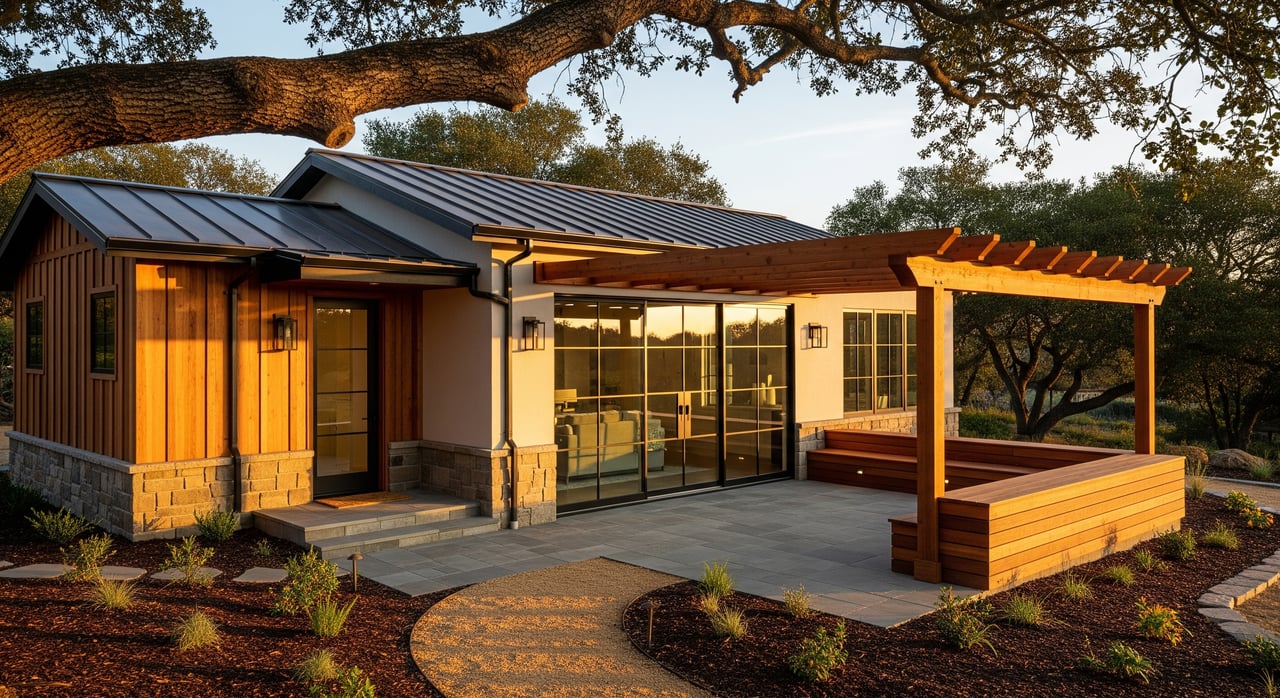
Thinking about building an ADU on your Coarsegold property but not sure where to start? You’re not alone. Between septic capacity, wildfire rules, and rural access, the details can feel overwhelming fast. In this guide, you’ll learn what an ADU costs in the foothills, how Madera County permits work, what can affect your timeline, and how an ADU may impact your resale value. Let’s dive in.
What an ADU adds to a Coarsegold home
An ADU can make your property more flexible. You can use it for long‑term rental income, multi‑generational living, a caretaker, or a guest space. Some owners use an ADU as a home office or studio and shift it to rental later.
In rural markets like Coarsegold, the right ADU can widen your buyer pool when you sell. Investors, multigenerational households, and work‑from‑home buyers may find the setup especially useful.
Can your Coarsegold lot support an ADU?
Septic and water
On many Coarsegold parcels, septic capacity is the gatekeeper. If your existing system cannot support the added bedrooms or fixtures, you may need an upgrade or a new engineered system. A percolation test or septic evaluation is often required. If you are on a private well, confirm well yield and water quality early.
Fire risk and WUI requirements
Coarsegold sits in a wildfire‑prone foothill area. Expect review for defensible space, road access, and sometimes sprinklers or ember‑resistant materials. Driveway width, turnarounds, and address signage can also come into play.
Topography and access
Hilly sites can increase grading, retaining wall, drainage, and foundation costs. In some cases, road improvements or turnouts are needed for emergency access, which can affect budget and design.
Zoning, setbacks, and who to call
Coarsegold is in unincorporated Madera County. The county’s Planning Department sets zoning and setback standards, and the Building Division handles plan check and permits. Environmental Health reviews septic and well issues, while the local fire agency or CAL FIRE reviews fire access and safety. Recheck current county rules before you design.
HOAs and short‑term rentals
If you have an HOA, review the CC&Rs for ADU rules and approval steps. If you plan to rent the ADU as a short‑term rental, confirm Madera County’s rules and any registration or operating requirements.
Permits in Madera County: your path
Ministerial approvals and why they matter
California’s ADU laws have streamlined many approvals. If your project meets ministerial criteria, the county can process your application without a public hearing. This often shortens review time. Health and fire reviews still apply, so build that into your schedule.
Typical timeline
From application to final occupancy, plan on roughly 3 to 12 months. Simpler conversions tend to land on the shorter end. New detached units, septic upgrades, and road improvements can extend that timeline.
What your submittal may include
- Site plan with lot lines, existing structures, and setbacks
- Floor plans, elevations, and structural drawings
- Title 24 energy compliance documents
- Septic evaluation or engineered system plan if on septic
- Fire access and safety documentation
ADU costs in Coarsegold
What drives the budget
- ADU type and size: conversion, attached, detached, or prefab
- Site work: grading, foundation, utilities, driveway, drainage
- Septic and well: evaluation and potential upgrades
- Fire and access: defensible space, sprinklers, address and road standards
- Permits, fees, and professional services
- Finish level and contingency
Typical ranges by ADU type
- Garage or interior conversion: often the lowest cost. Many projects fall from the tens of thousands up to about $80,000 to $150,000 depending on systems and finishes.
- Attached ADU or high‑end conversions: usually in the low hundreds of thousands.
- Detached, site‑built ADU: roughly $150 to $400+ per square foot depending on size, site complexity, labor, and finishes. Small, simple units might start around $150,000. Larger or higher‑end units can exceed $400,000.
- Prefab/modular ADU: some units are priced around the mid‑$50,000 to $200,000 range before local site work. Foundations, utilities, and permits often lift total costs well beyond the base factory price.
These are not quotes. Always get local bids that include site conditions.
Site work, utilities, and safety
In rural Coarsegold, site work often drives cost. Septic upgrades or a new engineered system can range roughly from $10,000 to $40,000+ depending on soils and design. Driveway improvements, turnarounds, retaining walls, and drainage can add notable line items. Fire safety work may be minor or significant depending on access and required features.
Permits, professional services, and contingency
Plan review and building permits vary by project valuation and county fee schedule. Designers and engineers bill separately. You will also need Title 24 energy compliance documentation. Keep a contingency of 10 to 20 percent for surprises.
Paying for your ADU
Common financing paths
- Cash or savings
- Home equity loan or HELOC
- Cash‑out refinance
- Renovation or construction loans, including construction‑to‑permanent
- FHA 203(k) when eligible
- Private home improvement loans and specialized ADU products from some lenders
- Grants or incentives that may appear periodically at the state or local level
Lender programs vary on how they treat ADU income and collateral. Speak with lenders early to compare terms and timing.
Value, rent, and taxes
Rental income potential
Rents depend on size, condition, and local demand. Coarsegold’s rural setting means rates will differ from larger cities. For a realistic view, compare recent local listings and talk with property managers. If you plan on short‑term rentals, confirm county and HOA rules first.
Appraisal and resale impact
A permitted, code‑compliant ADU tends to help appraisal and resale more than an unpermitted unit. Appraisers may use the income approach, cost approach, and comparable sales to value the property. Verifiable rental history and market rent data can support value, though lenders and appraisers apply conservative assumptions.
Property tax and reassessment
An ADU typically triggers a supplemental assessment based on the added value of the new construction. Your base assessment on the main home usually remains. Check with the Madera County Assessor for the most current policy.
Smart first steps for Coarsegold owners
- Check your parcel’s zoning and any county ADU standards.
- Call Environmental Health early to discuss septic capacity and testing.
- Contact the local fire agency about access, defensible space, and potential sprinklers.
- Pull a plot plan and review your title report for easements that could affect siting.
- If in an HOA, review CC&Rs and board approval steps.
- Get ballpark quotes for your preferred ADU type, including site work.
- If rent is part of your plan, survey local listings and speak with a property manager.
- For tax impacts, consult the Assessor and a local appraiser familiar with ADUs.
Conversion vs. detached vs. prefab
- Garage or interior conversion: best when the structure and systems are in good shape. Usually the fastest and most budget‑friendly.
- Attached ADU: good when you want efficient utility tie‑ins and a cohesive design.
- Detached, site‑built: best for privacy and independent living, but typically the most expensive.
- Prefab/modular: can shorten the build window on the home itself, but local site work, foundations, and permits still apply.
Choose based on your lot, septic capacity, access, and budget rather than headline prices.
How we can help
If you are weighing an ADU to boost utility, rental income, or resale, local guidance pays off. We can help you understand how buyers value ADUs in Coarsegold, what documentation they expect, and how to position your property when it is time to sell. When you are ready, we can also introduce you to local lenders and pros so you can compare options and move forward with confidence.
Ready to plan your next step? Reach out to Jack & Sherri DuBeau for neighborly, informed guidance on ADUs, resale strategy, and your long‑term goals.
FAQs
How long does it take to permit and build an ADU in Coarsegold?
- Most projects run about 3 to 12 months from application to occupancy, with simple conversions on the short end and detached builds with septic or access upgrades on the long end.
What ADU type is most affordable in Madera County?
- Garage or interior conversions are often the lowest‑cost path, while detached, site‑built units tend to be the most expensive due to foundations, utilities, and site work.
Do I need to upgrade my septic for an ADU?
- It depends on capacity and design; many rural lots require a septic evaluation and some need an engineered upgrade or new system before an ADU is approved.
Can I use my ADU as a short‑term rental in Coarsegold?
- Possibly, but you must confirm Madera County’s rules and any HOA restrictions, and you may need registration, safety, or parking compliance.
Will an ADU raise my property taxes?
- Adding an ADU is considered new construction and typically triggers a supplemental assessment on the added value, while your existing base assessment usually stays in place.
Who approves ADUs for Coarsegold addresses?
- Madera County handles planning, building, and environmental health reviews, and the local fire agency or CAL FIRE reviews wildfire access and safety requirements.